- Home
- Our Company
- Water Operations
- Lead Service Line Inventory Project
- Curb Box Inspections
Curb Box Inspections
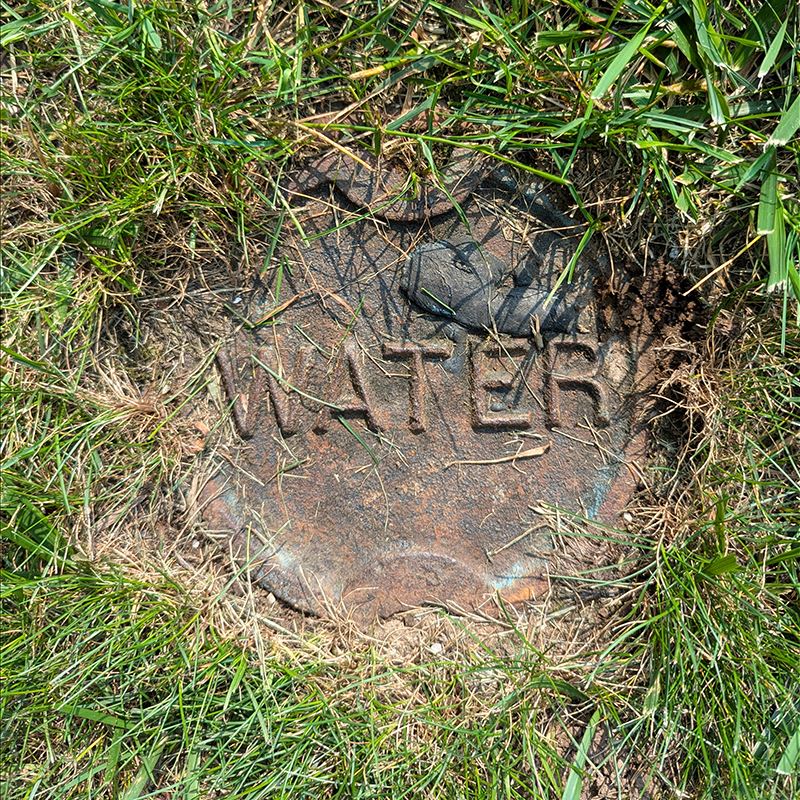 What is a curb box?
The curb box is a vertical pipe housing the shut-off valve (also called a curb stop) that lets the utility control the flow of water into the building without needing to go inside. Curb boxes are generally located between the house and the street.
It typically looks like a small metal or plastic cap flush with the ground, sometimes in a lawn or sidewalk. Beneath that cap is a long pipe, with a rod or keyhole leading to the shut-off valve.
Why is Groton Utilities doing service line inspections?
The Water division of Groton Utilities (GU) is conducting curb box and basement inspections in our ongoing efforts to identify all service line materials connecting to our water infrastructure. These inspections will be conducted in a visual manner and will not affect the availability of your water service.
Water line inspectors will utilize photography to document piping materials. GU will also be reaching out to schedule a brief appointment with you to see the service line as it enters your home, often in the basement. You will receive a letter requesting an appointment for this work.
Why is Groton Utilities identifying the materials service line pipes are made from?
GU is currently developing a drinking water service line inventory to comply with the United States Environmental Protection Agency’s (EPA) Lead and Copper Rule Revisions. Service lines are the pipes that connect individual buildings to the water mains that distribute water throughout the community.
Who is doing the inspections?
Members of our water division will be doing the inspections themselves. For your information it would be normal to see one of our team members taking photos and notes regarding the location and accessibility of the curb box. You
may also see blue paint or flag marking the curb box location in front of your house.
What is Potholing?
Later in the summer GU will begin potholing certain curb boxes. What is potholing? Potholing is the act of digging a small, precise hole to expose underground utilities like a water service line—without damaging them. This small excavation – the hole is generally 3 feet wide- will allow us to see two sections of the service line to confirm it material. Potholing may also be necessary when the curb box is buried too deep, covered over (by a sidewalk, lawn, driveway) or misaligned from years of shifting soil.
When potholing is necessary GU will notify you of the upcoming work and make all efforts to minimize disruption to the area around the curb box and improve access going forward.